Observation · interpretation · mutual understanding
Through Your Eyes
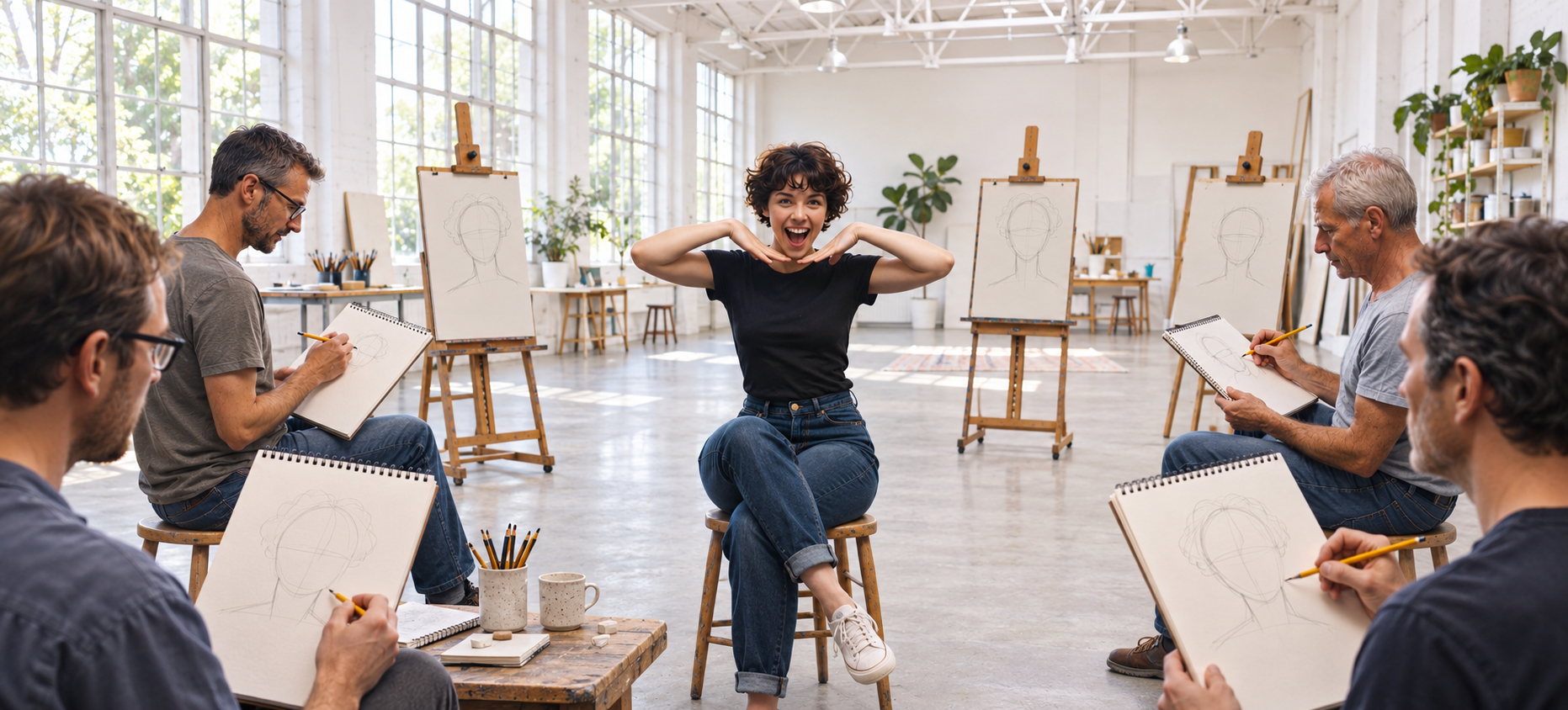
One face, many views. Everyone becomes the model once and everyone draws. The portraits are mixed together, and then the challenge begins: which drawings belong to the same person?
This is not about making a beautiful or perfect drawing. The short drawing time prevents technical skill from dominating. Attention, recognition, humour and curiosity take centre stage.
What does a manager or team leader gain from this?
Through Your Eyes shows how colleagues can look at the same person or situation and still notice something different. It gives a team a light and safe way to discuss first impressions, assumptions, group influence and the value of different perspectives.
Everyone participates as an equal
Every participant is both model and artist. The time pressure and number of quick portraits make artistic experience less important, allowing people who say they cannot draw to take part freely and enjoyably.
Collaboration becomes visible
During the sorting challenge, the group must observe, listen, question and decide together. A confident first voice may steer the group, while one small detail noticed by someone else can change the entire arrangement.
A meaningful conversation without a heavy exercise
The workshop is not a personality test and does not assess employees. It is a playful experience that reveals how observation and interpretation colour the way we see other people.
Planning this workshop for your team? Compare creative workshops by team goal and choose a focus for your group.
How does the workshop work?
In a group of twelve, everyone models for three minutes while the other eleven draw at the same time. In 36 minutes this creates 132 quick portraits: eleven different views of every participant.
The four stages of Through Your Eyes
From a quick glance to a shared discovery
- Everyone is seen
The model changes every three minutes. There is no time for perfectionism: draw what catches your attention first in shape, posture, expression, hair or gaze.
- Everything is mixed
After the final round, all portraits are collected and shuffled. Names and order disappear. Only the drawn observations remain.
- The portrait puzzle
The group tries to collect the drawings belonging to each person. Participants first look silently, then discuss, move drawings and persuade one another.
- Twelve groups, twelve conversations
We explore what makes a drawing recognisable. Which features appeared repeatedly? What did one artist notice that others missed? When did the group change its mind?
What happens during the creative process?
We recognise people not through one perfect detail but through a pattern of proportions, posture, expression and distinctive features. Each artist selects something different; together the portraits create a richer image than one drawing alone.
What does the team take away?
A surprising collection of portraits, plenty of enjoyment and one concrete insight: our perception is always partial, but genuine attention to one another creates greater mutual understanding.
Would you like to organise this workshop?
Tell Theo the group size and preferred date. You will receive a personal proposal.